




How Can Freelancers Improve Work-Life Balance?
Freelancers can improve work-life balance by:
Setting fixed working hours and avoiding unnecessary after-hours work.Creating a dedicated workspace to separate work from relaxation. Using time blocking to organize focused work, meetings, and breaks. Setting clear client boundaries for response times, communication, and project scope. Taking regular breaks to maintain focus and reduce mental fatigue. Protecting sleep and physical health instead of constantly working longer hours. Automating repetitive tasks and outsourcing low-value work when appropriate. Scheduling personal time and vacations just as seriously as client commitments.
Recognizing early burnout signs and adjusting workload before exhaustion becomes severe. The goal isn’t to work fewer hours, it is to create a sustainable work routine that supports your clients, business, health, and personal life.
Unlike traditional employees, freelancers wear many hats. Beyond client work, you’re also responsible for:
- Finding new clients
- Sending proposals
- Managing invoices
- Marketing your services
- Handling taxes and finances
- Learning new skills
- Running your business
Without a system to manage these responsibilities, it’s easy to feel like you’re working all the time.
Why Work-Life Balance Matters for Freelancers
Many freelancers start their careers seeking more freedom. Ironically, they often end up working longer hours than they did in full-time employment. When every hour can potentially generate income, taking a break may feel like losing money. Over time, this mindset creates a cycle of overworking that affects both your health and your business.
A healthy work-life balance helps you:
- Produce higher-quality work
- Improve focus and creativity
- Reduce stress and anxiety
- Build stronger client relationships
- Maintain better physical health
- Protect your mental well-being
- Create a sustainable freelance career
Remember, clients don’t pay you for the number of hours you work: they pay for the value you provide.
The Hidden Cost of Freelancer Burnout
Burnout doesn’t happen overnight. It develops gradually through weeks or months of excessive workloads, constant availability, and insufficient rest. Common causes include:
- Saying yes to every project
- Working without fixed hours
- Checking emails all day
- Constant client interruptions
- Unrealistic deadlines
- Financial pressure
- Lack of exercise
- Poor sleep habits
Burnout affects more than your mood. It reduces creativity, increases mistakes, lowers motivation, and can damage your professional reputation if deadlines or quality begin to slip. Think of burnout like driving a car without ever refueling. Eventually, no matter how powerful the engine is, it stops.
Signs You’re Heading Toward Burnout

Recognizing burnout early makes it much easier to recover before it becomes a serious problem.
Emotional Signs
You may notice:
- Feeling overwhelmed every morning
- Losing enthusiasm for client projects
- Becoming impatient with clients
- Increased anxiety
- Difficulty relaxing after work
- Constant guilt when taking breaks
Physical Symptoms
Your body often sends warning signals first.
These may include:
- Frequent headaches
- Neck and shoulder pain
- Eye strain
- Persistent fatigue
- Poor sleep quality
- Digestive issues
- Low energy throughout the day
Productivity Warning Signs
Ironically, working longer hours usually produces worse results.
Watch for:
- Missing deadlines
- Difficulty concentrating
- Procrastination
- Spending hours on simple tasks
- Forgetting important details
- Reduced creativity
- Constant multitasking
If several of these symptoms sound familiar, it’s time to adjust your work habits, not simply work harder.
15 Practical Work-Life Balance Tips for Freelancers
The following strategies are used by many successful freelancers to stay productive while protecting their health and personal lives.
1. Create Fixed Working Hours
One of the biggest mistakes freelancers make is being available 24/7. Instead of working whenever clients send messages, establish consistent office hours.
For example:
Monday - Friday
- 9:00 AM - 5:30 PM
or
- 7:00 AM - 3:00 PM
Choose hours that match your natural energy levels. If you’re most creative in the morning, schedule your demanding work during those hours. If you’re more productive in the evening, build your routine around that. The important thing is consistency. Once your workday ends, stop checking work emails and client messages unless it’s a genuine emergency.
Pro Tip: Add your working hours to your website, email signature, and client onboarding documents so expectations are clear from the beginning.
2. Build a Dedicated Workspace
Your environment has a huge impact on your productivity. Working from bed or the couch may feel comfortable at first, but it often blurs the line between work and relaxation. A dedicated workspace tells your brain:
“This is where work happens.”
Your workspace doesn’t need to be expensive.
A productive setup should include:
- Comfortable chair
- Proper desk
- Good lighting
- Reliable internet
- External monitor if possible
- Minimal distractions
- Ergonomic keyboard and mouse
Natural light can also improve mood, reduce eye strain, and help maintain your body’s natural sleep cycle. If working from home becomes distracting, consider spending a few hours each week in a coworking space or quiet café.
3. Use Time Blocking Instead of To-Do Lists

A long to-do list can quickly become overwhelming. Instead, assign specific blocks of time to each type of work.
Example:
| Time | Task |
| 8:00 - 10:00 | Deep client work |
| 10:00 - 10:20 | Break |
| 10:20 - 12:00 | Project completion |
| 12:00 - 1:00 | Lunch |
| 1:00 - 2:00 | Meetings |
| 2:00 - 3:00 | Emails |
| 3:00 - 5:00 | Marketing & Admin |
Time blocking helps you:
- Reduce decision fatigue
- Stay focused
- Avoid multitasking
- Complete important work earlier
- Protect personal time
Instead of wondering what to do next, your calendar already has the answer.
4. Prioritize Deep Work
Not all working hours are equally productive. Responding to emails every few minutes destroys concentration and slows progress. Reserve uninterrupted blocks of time for your most valuable work.
During deep work sessions:
- Turn off notifications.
- Close unnecessary browser tabs.
- Silence your phone.
- Avoid checking social media.
- Focus on one task until completion.
Even two hours of distraction-free work can produce more results than six hours of constant interruptions.
5. Set Clear Client Boundaries
Many freelancers fear saying “no” because they worry about losing clients. In reality, professional boundaries usually increase respect: not reduce it. From the start of every project, communicate:
- Your working hours
- Response times
- Revision policy
- Project scope
- Preferred communication channel
- Emergency contact expectations
For example:
“I typically respond to emails within one business day during my office hours (Monday - Friday, 9 AM - 5 PM).” Clear expectations prevent misunderstandings and reduce unnecessary stress. Clients value reliability more than constant availability.
6. Learn to Say No Without Feeling Guilty
Every project you accept consumes time, energy, and attention. Saying yes to everything often means saying no to your health, family, or existing clients. Before accepting new work, ask yourself:
- Do I have enough time?
- Does this fit my expertise?
- Is the budget worthwhile?
- Will this delay existing projects?
- Does this client align with my long-term goals?
Turning down a project professionally today can protect your reputation tomorrow. A simple response like this is often enough:
“Thank you for thinking of me. Unfortunately, my current schedule won’t allow me to deliver the quality you deserve, so I’ll have to decline this opportunity.”
Professional freelancers don’t accept every opportunity, they choose the right ones.
7. Plan Tomorrow Before Today Ends
One of the simplest ways to reduce stress is to avoid starting each morning wondering what to do first. Before ending your workday, spend 10 - 15 minutes preparing for tomorrow. Review unfinished tasks, check upcoming deadlines, and identify your top priorities.
A simple planning routine can include:
- Reviewing today’s progress
- Listing tomorrow’s three most important tasks
- Preparing files or documents you’ll need
- Blocking time on your calendar
- Confirming upcoming meetings
Starting your day with a clear plan reduces decision fatigue and allows you to begin productive work immediately.
Pro Tip: Follow the “Rule of Three.” Instead of creating a long task list, identify the three tasks that will have the greatest impact on your business.
8. Take Intentional Breaks Throughout the Day
Many freelancers believe working continuously leads to higher productivity. In reality, your brain needs regular recovery periods to stay focused. Working for hours without a break often results in slower thinking, more mistakes, and lower-quality work. Try scheduling short breaks throughout your day.
Some effective break ideas include:
- Taking a short walk
- Stretching your body
- Drinking water
- Practicing deep breathing
- Looking away from your screen
- Listening to relaxing music
You can also use the Pomodoro Technique, which involves:
- 25 minutes of focused work
- 5-minute break
After four sessions, take a longer 20 - 30 minute break. These small pauses help maintain energy and improve concentration throughout the day.
9. Make Your Physical Health a Business Priority
Your body is your most valuable business asset. If your health declines, your productivity, creativity, and earning potential often decline with it. Healthy habits don’t require spending hours in a gym.
Focus on consistent actions such as:
- Walking every day
- Stretching between work sessions
- Drinking enough water
- Eating balanced meals
- Improving posture
- Limiting excessive caffeine
Regular movement also reduces back pain, neck strain, and fatigue: common issues for freelancers who spend long hours at a computer. Remember, taking care of yourself isn’t time away from work, it’s an investment in your business.
10. Protect Your Sleep Schedule
Late-night work sessions may seem productive, but consistently sacrificing sleep often reduces your performance the following day.
Sleep supports:
- Memory
- Creativity
- Decision-making
- Problem-solving
- Emotional regulation
Instead of working until midnight every evening, establish a consistent bedtime. Helpful sleep habits include:
- Finishing work at least one hour before bed
- Avoiding screens before sleeping
- Keeping your bedroom cool and quiet
- Following the same sleep schedule every day
A well-rested freelancer usually produces better work in fewer hours than someone running on exhaustion.
11. Reduce Digital Distractions
Freelancers spend most of their day online, making distractions almost unavoidable. Every notification, social media check, or unnecessary email interrupts your focus and forces your brain to switch contexts.
To reduce distractions:
- Turn off non-essential notifications.
- Keep your phone out of reach during deep work.
- Close unused browser tabs.
- Schedule specific times for checking email.
- Log out of distracting websites while working.
Small improvements in focus can save several hours every week.
12. Automate Repetitive Tasks
Not every task requires your personal attention. Many routine activities can be automated, allowing you to spend more time on high-value work.
Consider automating:
- Invoice reminders
- Appointment scheduling
- Proposal templates
- Client onboarding
- File backups
- Social media scheduling
- Email responses
Automation doesn’t replace your expertise, it simply removes repetitive work from your schedule. The less time you spend on administration, the more time you have for meaningful work and personal life.
13. Outsource Low-Value Activities
Many freelancers believe they must do everything themselves. As your business grows, this mindset becomes a major obstacle.
Ask yourself:
“Am I the best person to do this task?”
If the answer is no, consider outsourcing. Common tasks freelancers delegate include:
- Bookkeeping
- Graphic design
- Video editing
- Administrative work
- Research
- Data entry
- Social media scheduling
Outsourcing allows you to focus on work that generates the highest return while reducing stress and preventing overload.
14. Schedule Personal Time Like Client Meetings
Many freelancers carefully schedule client meetings but leave personal time to chance. Unfortunately, unscheduled personal time often disappears under additional work. Treat personal activities as non-negotiable appointments.
Schedule time for:
- Exercise
- Family
- Reading
- Hobbies
- Prayer or meditation
- Outdoor activities
- Friends
- Relaxation
A balanced life doesn’t happen accidentally, it requires intentional planning.
15. Take Real Vacations Without Feeling Guilty
Many freelancers proudly claim they never take vacations. In reality, constantly working without extended breaks increases the risk of burnout and reduces long-term productivity.
Plan vacations in advance by:
- Informing clients early
- Finishing projects before leaving
- Setting automatic email replies
- Pausing notifications
- Avoiding work during your time off whenever possible
Rest isn’t a reward for success, it is part of what makes long-term success possible.
A Sample Freelancer Daily Routine

The perfect routine looks different for everyone, but having structure makes it easier to balance work and life.
| Time | Activity |
| 7:00 AM | Wake up and hydrate |
| 7:30 AM | Exercise or walk |
| 8:00 AM | Breakfast |
| 8:30 AM | Plan the day |
| 9:00 AM | Deep work session |
| 11:00 AM | Short break |
| 11:15 AM | Client projects |
| 1:00 PM | Lunch |
| 2:00 PM | Meetings and emails |
| 3:00 PM | Marketing or business development |
| 4:00 PM | Administrative tasks |
| 5:00 PM | Plan tomorrow |
| 5:30 PM | End work |
| Evening | Family, hobbies, relaxation |
This routine is only a starting point. Adjust it based on your energy levels, responsibilities, and preferred working hours.
Productivity Tools That Help Freelancers Stay Balanced
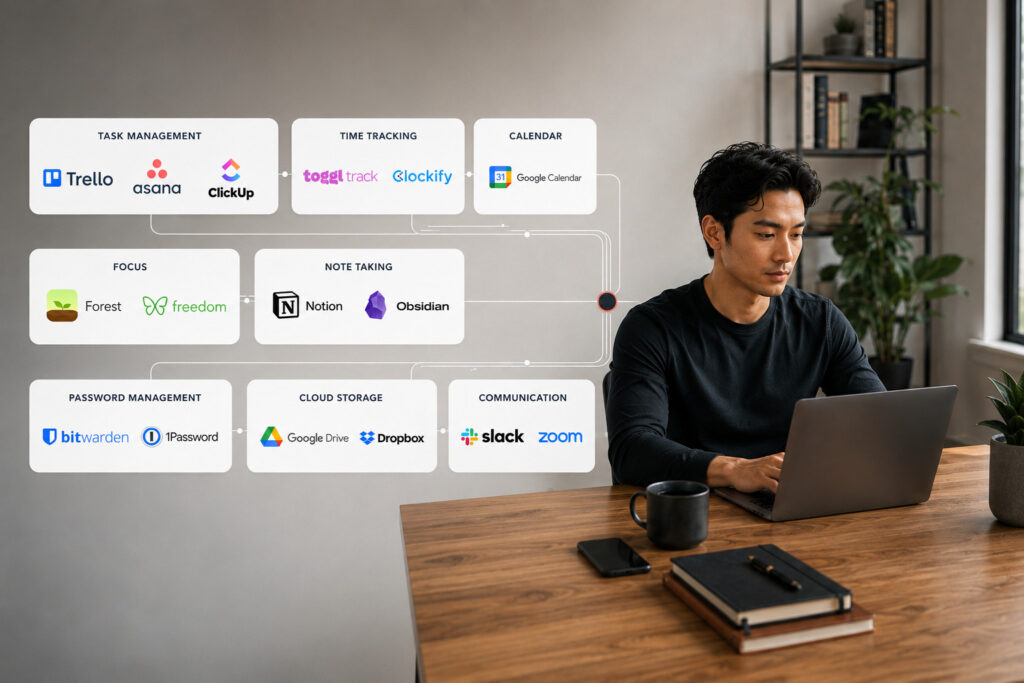
The right tools won’t create work-life balance on their own, but they can simplify your workflow and reduce unnecessary stress.
| Purpose | Examples |
| Task Management | Trello, Asana, ClickUp |
| Time Tracking | Toggl Track, Clockify |
| Calendar | Google Calendar |
| Focus | Forest, Freedom |
| Note Taking | Notion, Obsidian |
| Password Management | Bitwarden, 1Password |
| Cloud Storage | Google Drive, Dropbox |
| Communication | Slack, Zoom |
Choose tools that solve real problems rather than adding unnecessary complexity to your workflow.
Common Mistakes Freelancers Should Avoid
Even experienced freelancers occasionally develop habits that undermine their work-life balance. Avoid these common mistakes:
- Accepting every client request
- Working without fixed hours
- Skipping breaks
- Constantly checking email
- Ignoring physical health
- Neglecting sleep
- Working from bed every day
- Failing to plan your workload
- Not taking vacations
- Measuring success only by hours worked
Long-term freelance success comes from consistency, not constant hustle.
Quick Checklist for Better Work-Life Balance
Use this checklist to evaluate your current routine.
✅ I have consistent working hours.
✅ I stop working at the end of the day.
✅ I have a dedicated workspace.
✅ I schedule regular breaks.
✅ I communicate boundaries to clients.
✅ I exercise several times each week.
✅ I sleep consistently.
✅ I take time away from screens.
✅ I plan my work in advance.
✅ I regularly make time for family, hobbies, and rest.
If you answered “no” to several of these, start by improving one habit at a time. Small, consistent changes often lead to lasting results.
Final Thoughts
Freelancing gives you the freedom to design a career around your life, but that freedom also requires discipline. A healthy work-life balance isn’t achieved by accident. It’s built through daily choices: setting boundaries, protecting your time, caring for your health, and focusing on meaningful work instead of constant busyness. You don’t need to overhaul your entire routine overnight. Start with one or two practical changes, stay consistent, and refine your habits as your business grows.
The most successful freelancers aren’t the ones who work the longest hours. They’re the ones who create a sustainable way of working, one that supports their clients, their business, and their well-being for years to come.