



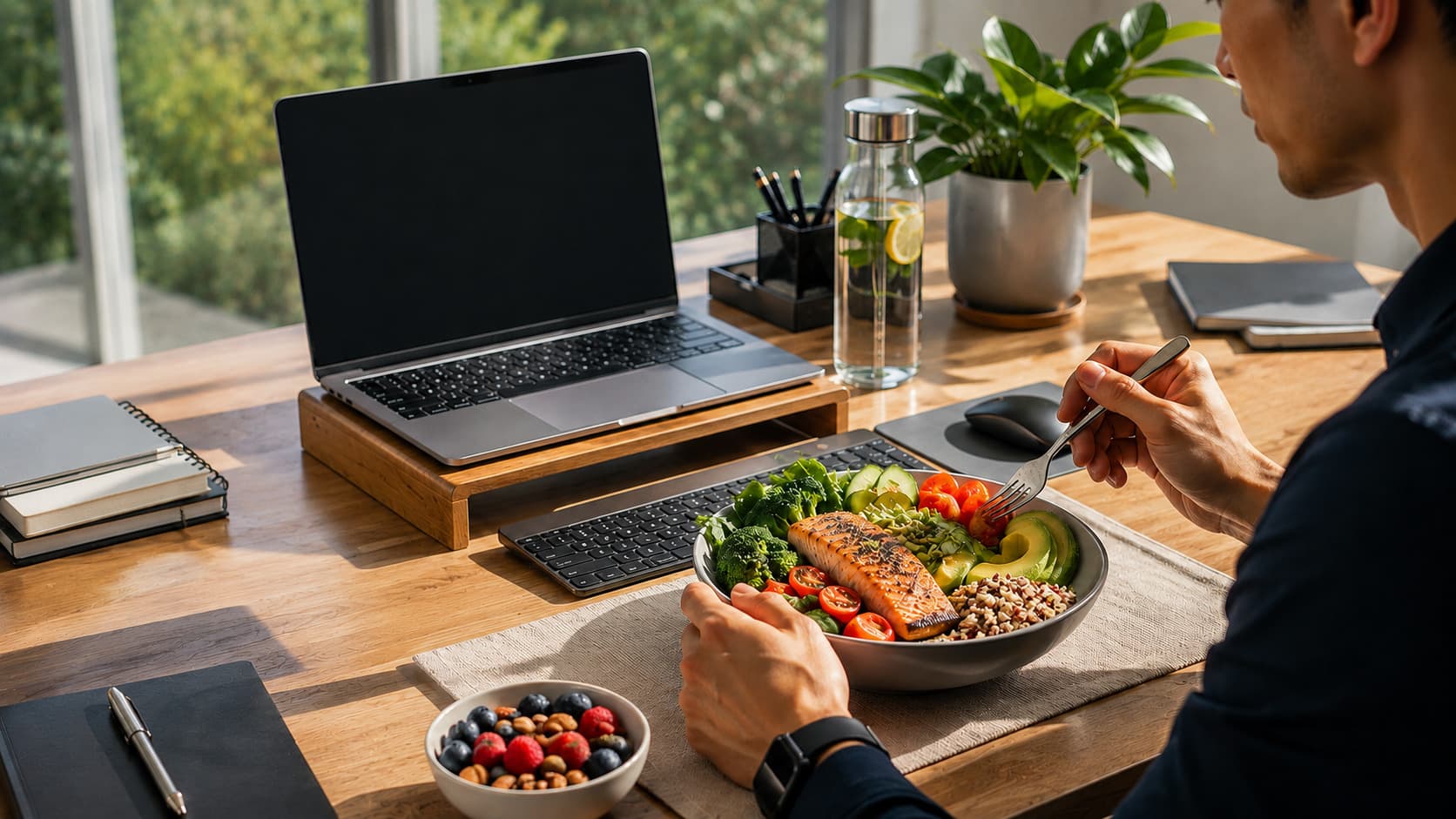
Healthy eating while working from home means following a consistent meal routine, choosing balanced meals, staying hydrated, and limiting mindless snacking. Planning meals, eating away from your workspace, and prioritizing whole foods can improve focus, boost energy, and support long-term health and productivity.
Without a commute, scheduled lunch breaks, or coworkers stepping away for meals, it’s easy to develop unhealthy habits. You might grab a handful of chips between meetings, skip lunch because you’re busy, or keep refilling your coffee cup instead of drinking water. Over time, these small choices can affect your energy, concentration, mood, and overall productivity.
The good news is that eating well while working remotely doesn’t require a complicated diet or expensive superfoods. A few intentional habits, such as planning meals, choosing balanced foods, and avoiding mindless snacking, can help you stay focused, productive, and healthier throughout the day.
Whether you’re a freelancer, remote employee, entrepreneur, or digital nomad, this guide will show you practical ways to build a healthy eating routine that fits your work-from-home lifestyle.
Quick Summary
Healthy Eating While Working From Home at a Glance
✅ Follow a regular meal schedule instead of grazing all day.
✅ Prepare balanced meals with protein, fiber, healthy fats, and whole grains.
✅ Keep healthy snacks nearby and limit junk food at home.
✅ Stay hydrated and avoid relying on caffeine for energy.
✅ Practice mindful eating by stepping away from your workspace during meals.
✅ Meal prep and grocery planning make healthy choices easier on busy workdays.
What Is Healthy Eating While Working From Home?
Healthy eating while working from home means making intentional food choices that fuel your body and mind throughout the workday. Rather than eating whenever you’re bored or stressed, you follow a consistent eating routine that includes balanced meals, nutritious snacks, and adequate hydration.
A healthy work-from-home diet focuses on:
- Whole, minimally processed foods
- Lean proteins
- Fiber-rich fruits and vegetables
- Whole grains
- Healthy fats
- Plenty of water
At the same time, it encourages limiting foods and drinks high in added sugar, unhealthy fats, and excess sodium.
The goal isn’t perfection: it’s consistency. Small improvements made every day often lead to better long-term health than following restrictive diets that are difficult to maintain.
Why Healthy Eating Matters for Remote Workers
Food is more than fuel. It directly affects how you think, feel, and perform throughout the day.
When you choose balanced meals, your body receives a steady supply of nutrients that help regulate blood sugar, support brain function, and maintain energy. On the other hand, frequently relying on sugary snacks, skipping meals, or overeating can leave you feeling sluggish and distracted.
Healthy eating while working from home can help you:
- Maintain steady energy levels
- Improve concentration and memory
- Reduce afternoon energy crashes
- Stay productive for longer periods
- Support a healthy body weight
- Strengthen your immune system
- Improve mood and mental well-being
Think of your body like a high-performance machine. Quality fuel helps it run efficiently, while poor-quality fuel often leads to inconsistent performance.
The Link Between Nutrition and Productivity
Many people blame poor productivity on workload or lack of motivation when nutrition may be part of the problem.
Meals rich in lean protein, complex carbohydrates, healthy fats, and fiber release energy gradually, helping you stay focused during long work sessions.
By contrast, foods high in refined sugar can cause a quick spike in blood sugar followed by a rapid drop, leaving you tired, hungry, and craving more snacks.
Simple nutrition choices can have a noticeable impact on:
- Decision-making
- Creativity
- Focus
- Memory
- Problem-solving
- Mood
- Overall work performance
For freelancers and remote professionals, maintaining consistent energy can also improve client communication, meeting performance, and the quality of completed work.
Common Nutrition Challenges When Working From Home
Working remotely offers flexibility, but it also creates unique eating challenges.
Recognizing these obstacles is the first step toward building healthier habits.
1. Constant Access to the Kitchen
Unlike a traditional office, your kitchen is only a few steps away.
The constant visibility of food makes it easier to snack without thinking, especially during stressful tasks or moments of boredom.
Sometimes you’re not actually hungry, you simply need a break from work.
2. Mindless Snacking
Many remote workers eat while answering emails, attending virtual meetings, or scrolling through social media.
Because your attention is elsewhere, you may eat far more than your body actually needs.
Mindless eating often leads to:
- Larger portions
- More calories
- Less satisfaction
- Frequent cravings
3. Skipping Meals
Busy schedules can make lunch feel optional.
You may promise yourself you’ll eat “after this meeting,” only to realize it’s late afternoon and you’ve barely eaten all day.
Skipping meals can result in:
- Low energy
- Poor concentration
- Irritability
- Overeating later in the day
4. Too Much Coffee
Coffee can improve alertness when consumed in moderation.
However, relying on several large cups each day instead of eating balanced meals may contribute to:
- Anxiety
- Poor sleep
- Headaches
- Digestive discomfort
- Energy crashes
Moderation is key.
5. Emotional Eating
Remote work can sometimes feel isolating or stressful.
Some people respond to stress, boredom, frustration, or loneliness by eating, even when they aren’t physically hungry.
Learning to recognize emotional triggers helps you make more intentional choices instead of automatically reaching for snacks.
Signs Your Current Eating Habits Are Hurting Productivity
Your body often sends signals when your nutrition needs attention.
You may notice:
- Feeling tired before noon
- Frequent afternoon crashes
- Difficulty concentrating
- Constant cravings for sugary foods
- Feeling hungry shortly after meals
- Drinking coffee just to stay awake
- Regular headaches
- Weight gain from frequent snacking
- Low motivation during the workday
If several of these sound familiar, improving your eating routine may have a greater impact than simply working longer hours.
15 Healthy Eating Tips for Working From Home
These practical strategies can help you build sustainable eating habits that support both your health and your productivity.
1. Create a Consistent Meal Schedule
One of the biggest advantages of office work is structure.
When working remotely, that structure often disappears.
Instead of eating whenever you remember or whenever you pass the kitchen, plan regular meal and snack times.
For example:
| Time | Meal |
| 8:00 AM | Breakfast |
| 10:30 AM | Healthy snack |
| 1:00 PM | Lunch |
| 4:00 PM | Healthy snack |
| 7:00 PM | Dinner |
Following a consistent eating schedule helps regulate hunger, maintain steady energy, and reduce unnecessary snacking.
Treat your meals like important appointments in your calendar.
2. Keep Your Workspace Away From the Kitchen
The environment shapes behavior.
If your desk faces the refrigerator or pantry, you’ll likely think about food more often.
Whenever possible:
- Work in a separate room.
- Face away from the kitchen.
- Avoid storing snacks on your desk.
- Visit the kitchen only during planned meal breaks.
Even creating a visual boundary between your workspace and eating area can reduce mindless trips to the fridge.
3. Plan and Prepare Meals Ahead of Time

Healthy decisions become much easier when the work is already done.
Meal prep doesn’t mean cooking an entire week’s worth of food in one session.
It can be as simple as:
- Washing vegetables
- Cooking extra chicken or tofu
- Preparing overnight oats
- Portioning healthy snacks
- Cooking rice or quinoa in advance
Having nutritious ingredients ready reduces the temptation to order fast food or reach for processed snacks during a busy day.
4. Build Balanced Meals
A balanced plate keeps you fuller longer and provides more stable energy throughout the day.
Aim to include:
- ½ plate: Vegetables
- ¼ plate: Lean protein
- ¼ plate: Whole grains or other high-fiber carbohydrates
Complete the meal with healthy fats such as avocado, nuts, seeds, or olive oil.
Examples include:
- Grilled chicken with brown rice and roasted vegetables
- Lentil salad with mixed greens and olive oil dressing
- Whole-grain wrap with turkey, vegetables, and hummus
- Stir-fried tofu with vegetables and quinoa
Balanced meals help reduce cravings and support sustained productivity.
5. Choose Healthy Snacks That Keep You Full
Snacking isn’t the problem, poor snack choices are.
Instead of reaching for cookies, chips, or candy, choose foods that combine protein and fiber for longer-lasting satisfaction.
Healthy snack ideas include:
- Greek yogurt with berries
- Apple slices with peanut butter
- Mixed nuts (in moderate portions)
- Carrot sticks with hummus
- Cottage cheese with fruit
- Whole-grain crackers with tuna
- Hard-boiled eggs
- Roasted chickpeas
These snacks provide more sustained energy than highly processed alternatives and can help you avoid overeating at your next meal.
6. Stay Hydrated Throughout the Day
Fatigue, headaches, and poor concentration are sometimes caused by dehydration rather than hunger.
Keep a reusable water bottle on your desk and sip regularly throughout the day.
Simple ways to drink more water include:
- Refill your bottle every morning.
- Drink a glass of water before each meal.
- Add lemon, cucumber, or mint for flavor.
- Choose water instead of sugary drinks whenever possible.
Proper hydration supports brain function, helps regulate body temperature, and can reduce unnecessary snacking triggered by thirst.
7. Limit Sugary Drinks and Energy Drinks
When deadlines pile up, it can be tempting to reach for soda, sweetened coffee, or energy drinks. While they may provide a quick boost, they’re often followed by an energy crash that leaves you feeling even more tired.
Instead, choose drinks that keep you hydrated without adding excessive sugar.
Better options include:
- Plain water
- Sparkling water with lemon
- Unsweetened tea
- Herbal tea
- Black coffee (in moderation)
If you enjoy flavored drinks, try infusing water with cucumber, berries, mint, or citrus fruits for a refreshing alternative.
8. Don’t Rely on Coffee for Energy
Coffee can be part of a healthy routine, but it shouldn’t replace nutritious meals or adequate sleep.
Too much caffeine may contribute to:
- Jitters
- Anxiety
- Poor sleep quality
- Digestive discomfort
- Afternoon energy crashes
For most healthy adults, moderate caffeine intake is generally considered safe, but individual tolerance varies.
If you find yourself drinking coffee simply because you’re exhausted, ask yourself:
- Did I eat breakfast?
- Have I had enough water today?
- Did I sleep well last night?
Addressing the root cause often works better than another cup of coffee.
9. Practice Mindful Eating
Many people eat lunch while replying to emails or attending virtual meetings.
The problem?
Your brain is focused on work, not your meal. Mindful eating means giving your food your full attention.
Try to:
- Step away from your computer.
- Sit at a table.
- Eat slowly.
- Chew thoroughly.
- Notice flavors and textures.
- Stop eating when comfortably full.
Even a 20-minute lunch break can leave you feeling more refreshed than eating at your desk in five minutes.
10. Control Portion Sizes
Healthy foods can still be overeating. Instead of eating directly from a bag or container, portion your food before sitting down.
A simple plate method works well:
| Plate Portion | Food Type |
| ½ | Vegetables |
| ¼ | Lean protein |
| ¼ | Whole grains or high-fiber carbohydrates |
This balanced approach supports steady energy while helping you avoid overeating.
11. Cook More Meals at Home
One of the biggest advantages of working remotely is having access to your own kitchen.
Preparing meals at home gives you greater control over:
- Ingredients
- Portion sizes
- Added sugar
- Salt
- Cooking oils
Simple meals don’t need to be time consuming.
Examples include:
- Vegetable omelet with whole-grain toast
- Grilled chicken salad
- Lentil soup
- Stir-fried vegetables with tofu
- Baked salmon with roasted vegetables
- Chickpea and quinoa bowls
Cooking more often doesn’t require gourmet skills, it simply means making healthier choices more consistently.
12. Keep Healthy Foods Visible
Your environment influences your decisions more than willpower alone.
If cookies are sitting on your desk while fruit is hidden in the refrigerator, guess which one you’re more likely to eat?
Make healthy choices the easy choices.
Try keeping:
- Fresh fruit in a bowl
- Cut vegetables in clear containers
- Nuts in portion-sized containers
- Greek yogurt at eye level in the refrigerator
Meanwhile, store less nutritious snacks out of immediate sight or avoid buying them altogether if they’re difficult to resist.
13. Never Skip Breakfast
Breakfast helps replenish your body’s energy after an overnight fast and prepares you for the day ahead.
A balanced breakfast can improve concentration and reduce mid-morning cravings.
Healthy breakfast ideas include:
- Oatmeal with berries and nuts
- Greek yogurt with fruit and granola
- Whole-grain toast with eggs
- Smoothie with spinach, banana, oats, and yogurt
- Cottage cheese with fruit
- Peanut butter on whole-grain toast
Choose meals that combine protein, fiber, and healthy fats to keep you satisfied longer.
14. Plan Your Grocery Shopping
Healthy eating often begins before you enter the kitchen, it starts at the grocery store.
Shopping without a plan can lead to impulse purchases and fewer nutritious options at home.
Before shopping:
- Plan meals for the week.
- Check what you already have.
- Write a shopping list.
- Buy plenty of fruits and vegetables.
- Choose lean protein sources.
- Stock whole grains.
- Keep healthy snacks available.
Planning ahead saves time, reduces food waste, and makes healthy eating easier throughout the week.
15. Build Sustainable Habits Instead of Following Strict Diets
Many people start with ambitious nutrition plans that are difficult to maintain.
Long term success comes from consistency, not perfection.
Rather than aiming for a “perfect” diet, focus on habits you can realistically continue.
Examples include:
- Drinking an extra glass of water each day
- Adding vegetables to lunch
- Preparing meals every Sunday
- Replacing sugary drinks with water
- Choosing fruit instead of candy several times a week
Small improvements repeated consistently create lasting results.
A Sample Healthy Work-From-Home Meal Plan

If you’re unsure where to start, this simple meal plan provides balanced nutrition throughout the day.
| Time | Meal |
| 8:00 AM | Oatmeal with berries, walnuts, and Greek yogurt |
| 10:30 AM | Apple with peanut butter |
| 1:00 PM | Grilled chicken, brown rice, and mixed vegetables |
| 4:00 PM | Carrot sticks with hummus |
| 7:00 PM | Baked salmon, quinoa, and steamed broccoli |
Adjust portion sizes and food choices to suit your dietary needs, activity level, and personal preferences.
Healthy Snack Ideas for Busy Remote Workers

When hunger strikes between meals, choose snacks that provide lasting energy instead of quick sugar highs.
Some nutritious options include:
- Greek yogurt with fresh berries
- Mixed nuts (portion controlled)
- Fresh fruit
- Cottage cheese with pineapple
- Hard boiled eggs
- Hummus with cucumber and carrots
- Whole-grain crackers with tuna
- Roasted chickpeas
- Air popped popcorn
- Homemade energy bites
Aim for snacks that combine protein, fiber, or healthy fats to help keep you full until your next meal.
Foods That Help Improve Focus and Productivity

Certain foods provide nutrients that support steady energy and mental performance.
| Food | Why It Helps |
| Oats | Slow-release carbohydrates for sustained energy |
| Eggs | High quality protein and essential nutrients |
| Greek yogurt | Protein and calcium for satiety |
| Nuts | Healthy fats and minerals |
| Salmon | Rich in omega-3 fatty acids |
| Leafy greens | Vitamins, minerals, and fiber |
| Berries | Naturally rich in antioxidants |
| Beans and lentils | Protein and fiber for stable energy |
| Brown rice | Complex carbohydrates that help avoid energy crashes |
| Water | Supports hydration, concentration, and overall brain function |
No single food guarantees better productivity, but a balanced diet supports consistent performance over time.
Common Healthy Eating Mistakes Remote Workers Make
Even with the best intentions, it’s easy to develop habits that work against your goals.
Watch out for these common mistakes:
- Skipping breakfast
- Grazing throughout the day
- Eating while working
- Drinking too little water
- Depending on coffee for energy
- Ordering takeout too often
- Keeping junk food within easy reach
- Shopping without a grocery list
- Ignoring portion sizes
- Following unrealistic diet plans
Recognizing these patterns is the first step toward changing them.
Quick Daily Healthy Eating Checklist
Use this checklist to build healthier work-from-home habits.
✅ I ate breakfast today.
✅ I drank enough water.
✅ I ate balanced meals.
✅ I included fruits or vegetables in my meals.
✅ I chose healthy snacks.
✅ I stepped away from my desk during meals.
✅ I limited sugary drinks.
✅ I avoided unnecessary snacking.
✅ I planned tomorrow’s meals.